How to Clean a Bike Chain
- Set off
- Length
- 4 min read
- Number
- 30
A grimy chain is easy to ignore until it starts to squeak, skip or leave a black stripe on your calf. Dirt mixed with old oil turns into a gritty paste that grinds away at the chain, the cassette and the chainrings every time you pedal. Cleaning it is not glamorous, but it is one of the most satisfying jobs in home bike care: twenty quiet minutes, and the bike feels new again.
This guide covers two levels of cleaning. The quick wipe is something you can do after most rides. The deep clean is for when the chain looks black and sticky or after a wet, muddy outing.
What you will need
- Rags – old T-shirts are perfect. You will get through more than you expect.
- A stiff brush – a dedicated chain brush is handy, though an old toothbrush works for the links.
- Degreaser – a bike-specific, water-rinsable product is the gentlest choice. Avoid harsh solvents that can damage seals and paint.
- Chain lube – a "dry" lube for dusty, fair-weather riding or a "wet" lube for rain and winter roads.
- Disposable gloves – degreaser and old oil are hard on skin.
- Optional extras – a chain-cleaning box that clips around the chain, a bike stand and a chain wear checker.
Safety first
Work in a ventilated space and keep degreaser and lube well away from your brakes. On a bike with disc brakes, contaminated pads can lose much of their grip and usually need replacing, so cover the rotors with a rag or take the wheels out before you start. On rim brakes, keep the braking surface of the rim clean and dry. If any product does land on a braking surface, clean it with isopropyl alcohol and test the brakes at walking pace before you ride.
The quick wipe (five minutes)
- Shift into a middle gear so the chain runs straight.
- Hold a folded rag loosely around the lower run of the chain.
- Turn the pedals backward with your other hand so the chain runs through the rag. Keep going until the rag stops picking up much black.
- Apply a drop of lube to each roller on the inside of the chain while turning the cranks backward.
- Let it sit for a few minutes, then wipe the outside of the chain again. Lube belongs inside the rollers, not on the surface where it collects dirt.
The deep clean (twenty to thirty minutes)
1. Degrease the chain
Brush degreaser onto the chain while turning the pedals backward, working on a short section at a time. A chain-cleaning box makes this tidier: fill it with degreaser, clip it around the lower run and spin the cranks. Let the product soak for the time stated on the bottle.
2. Scrub the drivetrain
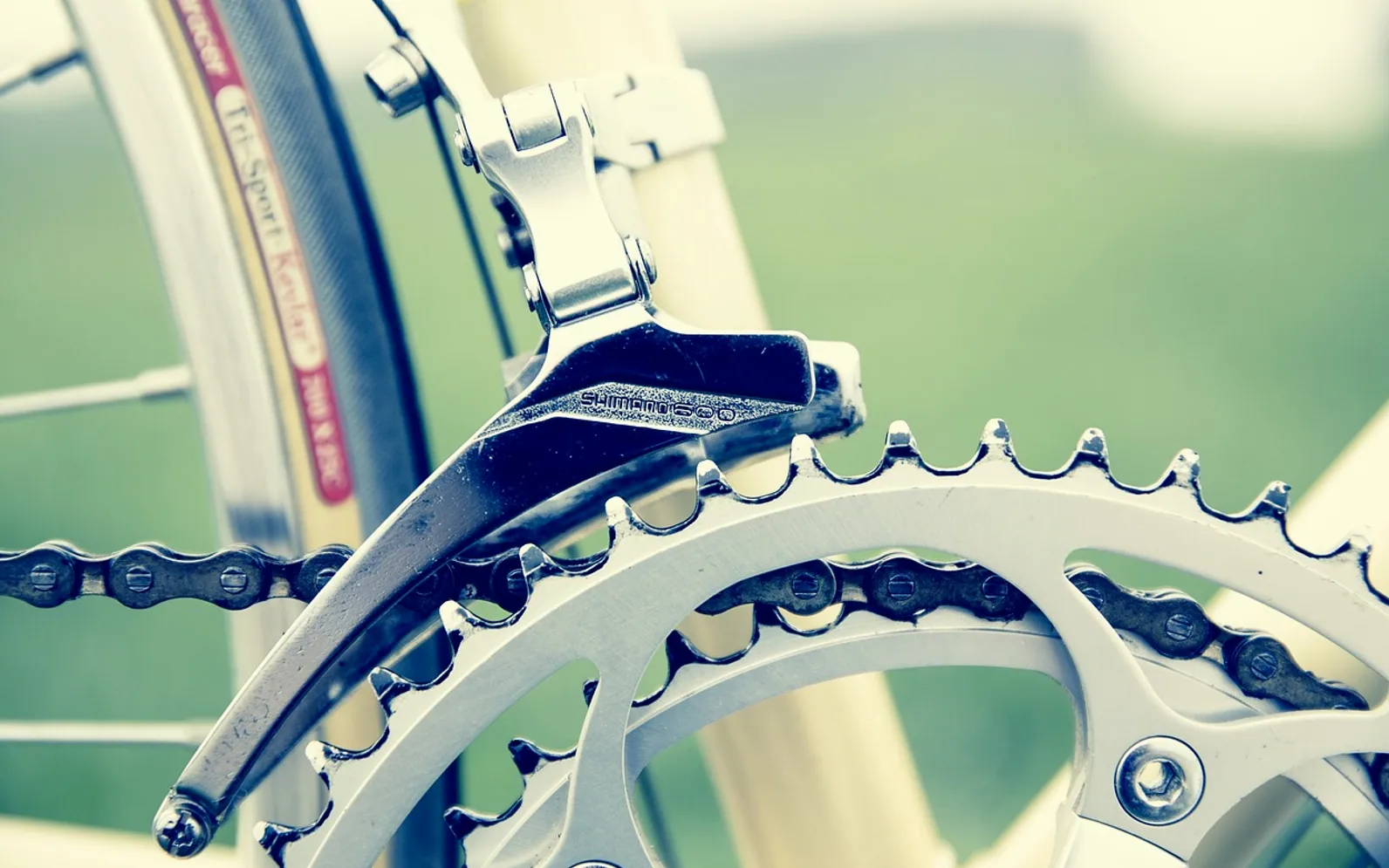
Use the brush on the sides of the chain, then turn to the cassette, the chainrings and the small jockey wheels on the rear derailleur. Those jockey wheels often hide a thick crust of grime. A rag pulled back and forth between the cassette cogs, like flossing teeth, lifts dirt the brush cannot reach.
3. Rinse gently
Rinse with a gentle stream of water or a damp sponge. Skip the pressure washer; it can force water and grit past the bearing seals in your hubs and bottom bracket.
4. Dry thoroughly
Run the chain through a dry rag until it comes away clean and the links feel dry. A chain left wet will rust surprisingly quickly, and fresh lube will not stick to water.
5. Lube and wipe
Add one drop of lube per roller, turn the cranks for a minute so it works into the links, then wipe off the excess. A shiny, slick exterior means too much oil.
Wet lube or dry lube?
| Type | Best for | Keep in mind |
|---|---|---|
| Dry lube | Dry, dusty roads and summer rides | Washes off in rain, so reapply more often |
| Wet lube | Rain, puddles and winter commuting | Attracts dirt, so wipe the chain well after applying |
| Wax-based | Riders who want a very clean drivetrain | Needs a thoroughly clean chain to start with |
How often should you clean it?
There is no fixed schedule. Let the chain tell you. If it looks dark and gritty, sounds noisy or you have just ridden through rain, it is time. Many riders do the quick wipe weekly and the deep clean every few weeks, more often in winter. If you commute by bike, a short routine at the weekend keeps things in order; our bike commuting tips for beginners include a simple weekly check you can pair with it.
Check for wear while you are there
Chains stretch as their pins and rollers wear. A worn chain shifts poorly and can damage the cassette and chainrings, which are pricier to replace. A chain checker tool drops into the links and tells you at a glance whether it is time for a new one. If you are unsure, a bike shop can measure it in seconds.
Common mistakes
- Adding fresh lube to a dirty chain, which just makes more grinding paste.
- Using too much lube and leaving the outside wet.
- Spraying products near disc brakes.
- Forgetting to dry the chain after rinsing.
A clean chain also makes roadside jobs less messy. If you ever need to take a wheel out on the move, you will be glad of it; see our guide on how to fix a flat bike tire for that one.
Keeping lists useful
How to make a checklist you will actually use
A list only helps if it is short enough to read and close enough to grab.
Keep it near the job
Tape the ride check inside the garage door and the movie list beside the remote.
Fewer lines
If a list runs past a dozen items, split it into two smaller ones.
Verbs first
Start each line with an action, such as squeeze, test or pack, so it reads as a task.
Review each season
Lights matter more in winter and sunscreen more in summer, so update the list when the clocks change.
Topic by topic
Lifestyle
- IVG Pro Pods: A Close Look at Flavor Accuracy, Convenience, and Everyday Reliability
- Smart, Clean, On Schedule: Container Service That Helps Small Businesses Thrive
- Choosing The Right Photo Booth Hire For Weddings, Birthdays, And Corporate Events
- Thoughtful Gifting: Etiquette and Cultural Notes for Ordering from an Online Flower Delivery Shop